






Behind every cup of coffee lies not only geography and climate, but centuries of history. Understanding coffee production per country…



Written by Chloé
Reading time 8 minDoes coffee have an acidic taste? When we talk about making a well-balanced coffee, we essentially mean finding harmony between the different flavours: sweetness, bitterness and acidity. The latter is often mistakenly considered to be a defect, since we’re more used to coffees that are roasted longer and therefore taste more bitter. However, coffee acidity can contribute to a more complex profile, adding clarity and beautiful floral and fruity notes to your drink.

To start with, we should be talking about acidities rather than acidity, as each type of acid contributes its own unique characteristics to your favourite drink. The pH scale measures how acidic or alkaline a substance is, running from 0 (highly acidic) to 14 (highly alkaline), with 7 being neutral. Most coffee sits around pH 4.85 to 5.10 on the pH scale, placing it in the acidic range alongside citrus fruits. Let’s focus on the three most important acids.
Often associated with lemons and citrus fruits, the citrus notes commonly found in Ethiopian coffee and Geisha coffee are all to do with the presence of citric acid. But contrary to what you might think, the presence of this acid itself is actually linked to sugar!
Malic acid is sometimes associated with green apples. It gives you a fresh sensation in your mouth! This acid can be found in Kenyan coffees, among others.
Chlorogenic acid is the most abundant acid in green coffee beans, particularly in lighter roasts. During the roasting process, a chemical reaction occurs: the longer and hotter the beans are roasted, the more chlorogenic acid breaks down. Green coffee contains the highest levels, while darker roasts have significantly less.At very dark roasts, up to 80% of chlorogenic acids may be lost.
| Acid | Flavour profile | Found in | Roast sensitivity |
|---|---|---|---|
| Citric acid | Lemon, orange, citrus brightness | Ethiopian, Geisha coffees | Decreases with roast |
| Malic acid | Green apple, fresh, crisp | Kenyan coffees | Decreases with roast |
| Phosphoric acid | Sparkling, effervescent, bright | High-grown East African coffees | Relatively stable |
| Tartaric acid | Wine-like, grape, vinous | Some African varieties | Low concentration |
| Chlorogenic acid | Astringent, contributes to body | All coffees (esp. light roasts) | Degrades heavily with roast (up to 80% lost in dark roasts) |
Acidic, bitter and sweet flavours are all naturally present in the coffee cherry. A base level of acidity is established when the coffee is grown, but it can then be altered at every subsequent step to ensure the desired aromatic profile.
The conditions in which coffee plants are grown have a major impact on acidity levels. Altitude is one of the most significant factors: coffees grown at higher elevations (typically above 1,500 metres) develop greater acidity and sweetness. At these heights, cooler temperatures slow down cherry ripening, allowing the beans to absorb more nutrients and aromatic precursors. The result is a more complex, vibrant cup.
Species and botanical variety also play a role. Arabica naturally contains less caffeine than robusta, which means it presents less bitterness and a noticeably more acidic flavour profile. Robusta varieties, being more resistant to insect attacks, produce higher caffeine levels and therefore more pronounced bitterness.
Finally, shade-grown coffee encourages the development of acidity and sweetness. Coffee trees grown in the shade obtain their nutrients from the soil rather than photosynthesis, which promotes the formation of more complex acids in the cherries. If the coffee has been well grown in the right environment, acidity and sweetness will be the dominant tasting notes.
The choice of processing method has a big impact on coffee acidity. It is this step that defines the profile of the green coffee beans. Most of the sweetness of the coffee cherry is found in its pulp, and the longer the coffee ferments with the pulp left on, the more interaction there is between the pulp and the bean.
For natural coffees, the beans are left fully intact as they ferment and dry, resulting in greater overall sweetness and heavier body with lower acidity. For traditional washed coffees, the pulp is removed at the start, which develops bright, clean acidity. However, great care must be taken to avoid over-fermentation, which can cause an unbalanced flavour by masking the acidity and introducing parasitic notes.
Just like grapes in winemaking, coffee cherries undergo fermentation through natural yeasts and bacteria found on the cherry skin. Coffee farmers can use different fermentation conditions (natural, washed, honey, anaerobic) to encourage the development of more or less acidity in origin coffees.
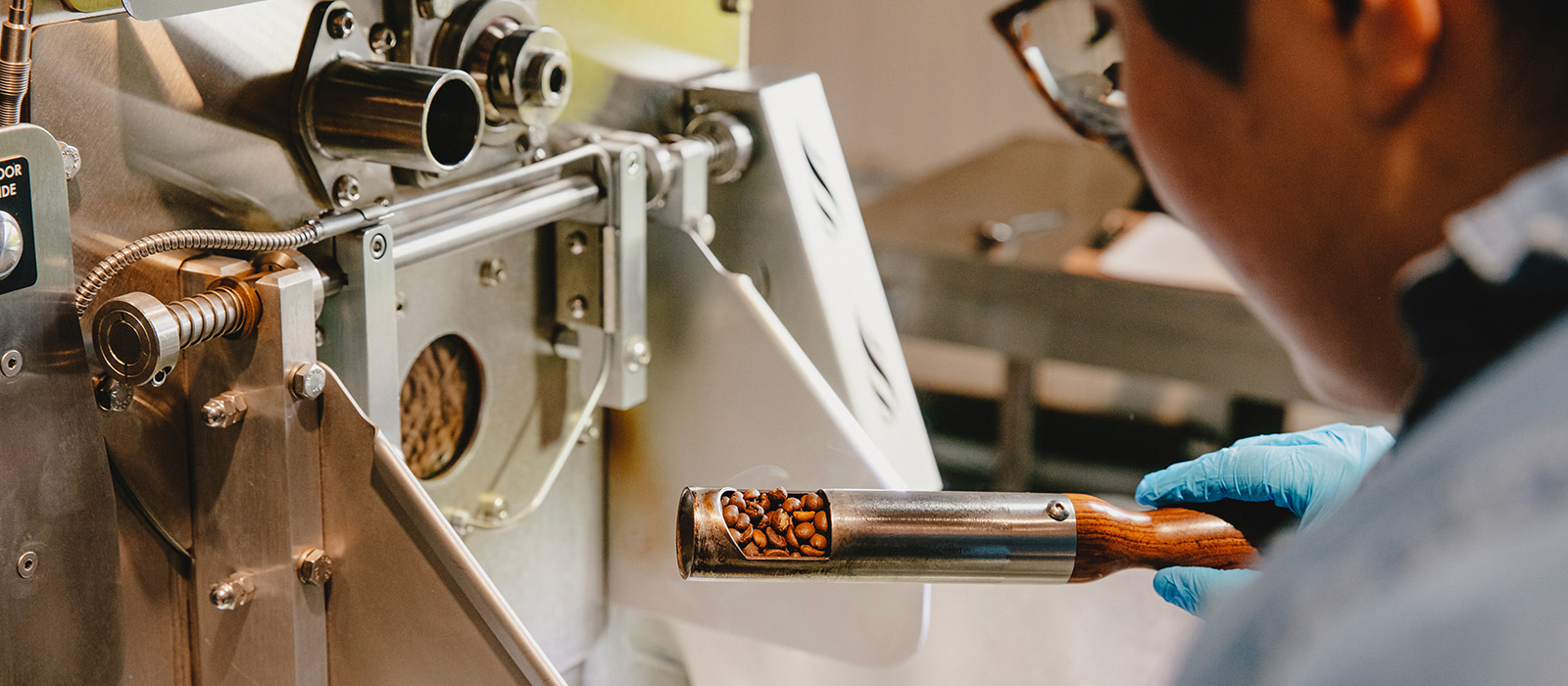
When roasters receive their batches of green coffee beans, they are able to make certain choices in order to enhance or reduce the coffee acidity. Remember, the longer the coffee beans are roasted, the less pronounced the characteristics associated with their terroir will become. The coffee will take on roasted notes of toast, hazelnut and caramel.
As we have already seen, good coffee naturally contains a certain level of acidity. Particularly in the case of speciality coffee, the main aim of the roasting process is to showcase the terroir of the coffee and let it express itself. The floral and fruity notes found in light or very light roasts are created by the acidity of the coffee, which remains bright and vibrant at these lower roast levels.
Acidity is still present in medium roast coffee, but it is offset by the overall sweetness resulting from the longer roasting time. Dark roasts, exposed to heat for an extended period, have lower levels of chlorogenic acids and therefore taste less acidic, with a smoother, more subdued profile.
Both acidity and bitterness are natural components of black coffee, but they play very different roles in your cup. Acidity brings brightness, vibrancy and those fruity or floral notes that make speciality coffee so appealing. Bitterness, on the other hand, contributes depth and a roasted character. The key is achieving balance according to your personal preference.
Since coffee is approximately 98% water, water quality also plays a significant role. Impurities such as chlorine or heavy metals can flatten perceived acidity and mute flavour clarity. Filtered water with a balanced mineral content helps acids extract cleanly, resulting in a brighter, more defined cup.
Here are practical ways to fine-tune the balance:
MaxiCoffee’s Tips
It’s worth noting that a sour taste is not the same as good acidity – sourness signals under-extraction, meaning the water hasn’t dissolved enough sugars from the coffee grounds to balance the acids.

Coffee acidity refers to the bright, lively flavour quality that gives your cup a pleasant sharpness—not a bad thing or a flaw. It’s comparable to the tartness you might enjoy in fruit juice or fresh berries. This desirable acidity brings vibrancy and complexity to your coffee, adding clarity and those delightful fruity or floral notes that speciality coffee lovers seek out.
Dark roasts, robusta beans, and coffees grown at lower elevations tend to have the lowest acidity. Some brands even market ‘low acid’ or ‘acid-free’ coffee specifically for sensitive stomachs. A great way to reduce acidity naturally is cold brewing, which extracts fewer acidic compounds thanks to the lower water temperature during steeping.
Coffee can aggravate acid reflux in sensitive individuals due to its natural acids and caffeine, which may stimulate stomach acid production. Stale coffee can be particularly harsh on your digestive system. If you’re prone to reflux, try opting for darker roasts or adding milk, which helps buffer the acidity and creates a gentler drinking experience.
Decaf coffee has slightly lower acidity than regular coffee, but it’s not acid-free. The decaffeination process removes some compounds along with the caffeine, typically bringing the pH from around 4.7 to about 5.0. However, the difference is modest, so decaf remains mildly acidic and may still affect those with very sensitive stomachs.
No — and this is one of the most important distinctions in coffee tasting. Good acidity is a clean, bright, structured sensation that adds vibrancy and complexity to the cup. Sourness, on the other hand, is a sign of under-extraction: when not enough sugars have been dissolved from the grounds to balance the acids, the result is an unpleasantly sharp, harsh taste. Think of the difference between the balanced tang of a ripe orange and the aggressive sharpness of an unripe lemon.
No — acidity and caffeine are entirely independent. A dark-roasted espresso may be high in caffeine but low in acidity, while a light-roasted Arabica pour-over can be bright and acidic with a relatively modest caffeine level. The two are governed by different compounds and different roasting reactions.
Understanding coffee acidity changes the way you experience every cup. It’s the result of a chain of decisions the altitude at which the coffee was grown, the processing method chosen by the farmer, the roast level applied by the roaster, and the brewing parameters you use at home. Whether you’re drawn to a vibrant, citrus-bright pour-over or a smooth, low-acid dark roast, knowing how acidity works gives you the tools to find, and recreate, the cup that’s right for you.
Discover all of our articles

Honey Process, Pulped or Lavado: Discover Other Coffee Processing Methods

Coffee Blend: the Art of Mixing and Roasting Different Coffee Beans ?